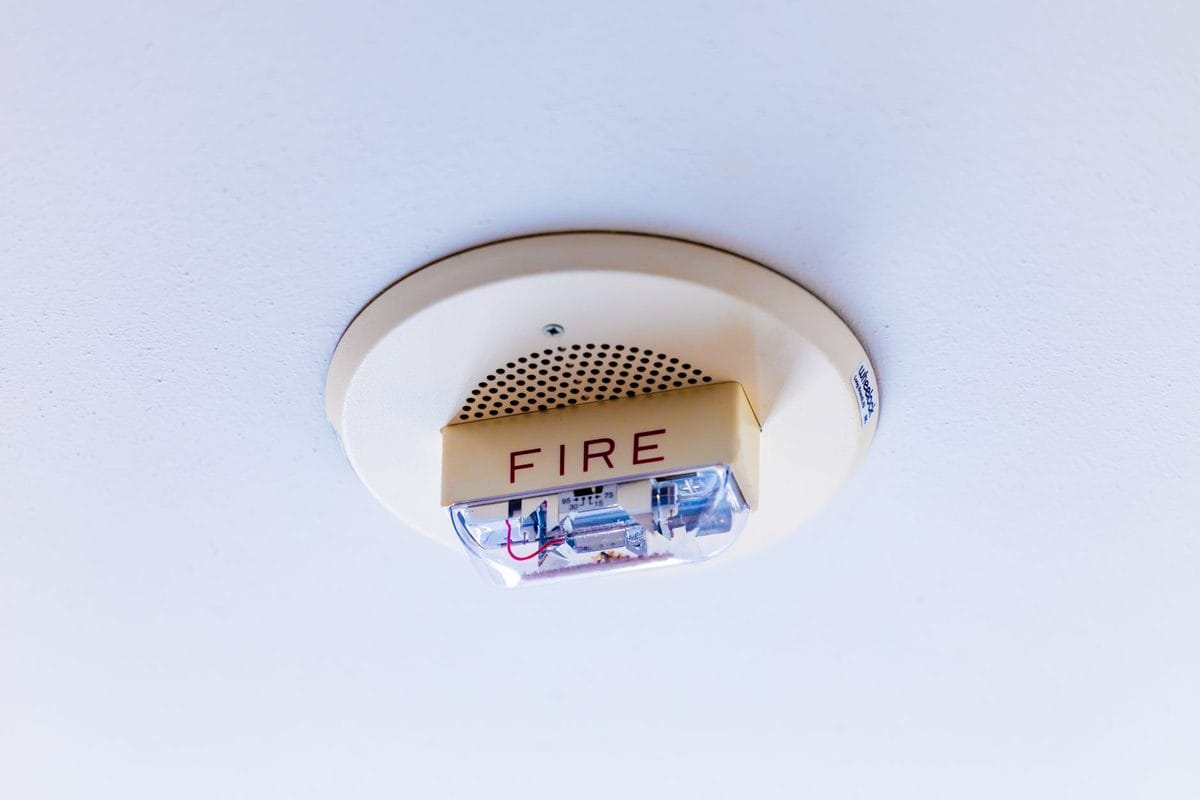
Every year around the last weekend of October, somebody on a UK parenting forum reminds the room to change their smoke alarm batteries when the clocks go back. It is good advice for a home that still runs on 9V batteries — but for a growing number of houses it is also eleven years out of date, because the alarm on the ceiling has no battery to change. It is a sealed unit with a ten-year lithium cell built in, and the only thing left to do is press the test button and mean it.
That gap between what people think they are supposed to do and what their actual alarms need is where most UK homes fall down on fire and carbon monoxide safety. With gas boilers and wood-burning stoves both firing up again for the season, and with the law on this having changed more recently than most homeowners realise, late September is a sensible moment to check what you actually have fitted, whether it meets the current rules, and whether it would wake anyone up.
Why this matters more in the next six weeks than it did in July
Carbon monoxide poisoning spikes in the colder months, and the reason is mechanical rather than mysterious. A boiler that has sat unused since April gets fired up again, a flue that has not been swept collects a season's worth of debris, and a wood burner gets its first proper load of the year from someone who has forgotten how much air it needs. Each of those is a plausible route to a blocked or poorly ventilated appliance spilling carbon monoxide into a room instead of sending it up the flue. Smoke risk follows a similar seasonal curve — more candles, more open fires, more electric blankets and portable heaters plugged in for the first time since spring, often into extension leads that have been sitting in a shed.
None of this means panic. It means this is the two-month window each year when a faulty or missing alarm actually matters, rather than a theoretical box left unticked. Test it now, while it's a five-minute job, not in November when the boiler's already been serviced and the temptation is to assume everything downstream of that visit is fine.
What English law actually requires — and it changed more than people assume
The Smoke and Carbon Monoxide Alarm (England) Regulations 2015 originally only required landlords to fit carbon monoxide alarms where a room had a solid fuel appliance — an open fire or a wood burner, essentially. That changed on 1 October 2022, when the amended regulations came into force and extended the CO alarm requirement to any room with a fixed combustion appliance, which brings gas boilers and gas fires into scope alongside wood burners (gas cookers are still excluded). At the same time, the smoke alarm requirement — at least one alarm on every storey used as living accommodation — was extended from private rented housing to social housing as well, and landlords were given a new duty to repair or replace an alarm as soon as reasonably practicable once they're told it's faulty.
Local authorities enforce this, and the number that actually matters to a landlord reading this is £5,000 — the maximum fine for failing to comply with a remedial notice. Alarms also now have to be tested at the start of every new tenancy, not just installed once and forgotten. If you own the flat you rent out and haven't looked at this since before 2022, it's worth five minutes to check what's actually fitted against what a fixed combustion appliance in the property now requires. Owner-occupiers in England aren't bound by these regulations directly — nobody is going to fine you for not having a CO alarm next to your own boiler. But Approved Document J and Part B of the Building Regulations require them wherever new or replacement combustion appliances are installed, so if you've had a boiler swapped or a wood burner fitted in the last few years, a certified installer should already have left you with the right alarms in place. Worth checking that they did.
Scotland and Wales run different rules — don't assume England's regs apply
Scotland went further and did it earlier. Since 1 February 2022, every home in Scotland — owner-occupied included, not just rented — has had to meet the national "tolerable standard" for fire safety: interlinked smoke alarms in the living room, hallways and landings, an interlinked heat alarm in the kitchen, and a carbon monoxide detector wherever there's a fuel-burning appliance like a boiler, gas fire or flue, or an integral garage. Interlinked means exactly what it sounds like — if one alarm anywhere in the house triggers, all of them sound, and that single change is doing most of the work in reducing the "the alarm went off two rooms away and nobody heard it" failure mode.
Wales took a different route. Since the Renting Homes (Wales) Act 2016 came into effect, rented properties have to meet a "fitness for human habitation" standard that includes a working smoke alarm on every storey and a CO alarm in any room with a fuel-burning appliance — similar in substance to the English rules but sitting inside a different piece of legislation with its own enforcement route through Rent Smart Wales. If you own property in more than one UK nation, don't assume the rule set from one transfers to the other; it doesn't, and the Scottish requirement in particular catches a lot of owner-occupiers who correctly remember that England's law is about rented housing and wrongly conclude the same is true everywhere.
Sealed ten-year alarms versus 9V: the trade-off is real, and worth making deliberately
Cheap alkaline-battery smoke alarms from a supermarket multipack still work, and they're still legal to fit in most circumstances. But they carry a maintenance debt that tends not to get paid: the low-battery chirp starts at 2am, someone silences it by pulling the battery out entirely rather than replacing it, and the alarm sits dead on the ceiling for months. A sealed ten-year lithium alarm — Aico's Ei3016, FireAngel's ST-630, or Kidde's equivalent sealed range, all commonly stocked at Screwfix, Wickes and Toolstation — removes that failure point completely, because there's no battery compartment to open. You press the test button once a month, vacuum the vents occasionally, and replace the entire unit when the date stamped on the back tells you to. Buy the sealed alarm. At roughly £15–£25 per smoke alarm and £20–£30 for a sealed CO alarm against £5–£10 for a basic replaceable-battery unit, the upfront cost is genuinely higher — but you're not paying it every year, and you're removing the single most common reason UK smoke alarms end up disconnected. That's not a marginal call; for anyone letting a property, it also closes off the "someone took the battery out" excuse that features in a lot of coroners' reports on fire deaths where an alarm was present but silenced.
Getting them to talk to each other without chasing cables into a period ceiling
A hard-wired interlink — mains-powered alarms with a physical cable run between them — is still the gold standard, and it's what a certified electrician will fit as standard in a new build or a full rewire. It's a much harder sell in an existing house with plastered ceilings and no accessible loft run between rooms, which is most UK homes built before the 1990s.
Radio-frequency interlink kits solve that without lifting a single floorboard. Aico's RadioLINK+ module clips onto the back of their alarms and links wirelessly with every other RadioLINK+ alarm in the house; FireAngel's equivalent range does the same thing built in. Fit one in the hall, one on the landing, one in each bedroom, and one heat alarm in the kitchen, and they form a mesh that all sounds together regardless of which one detected the problem first — genuinely useful in a house where the bedrooms are far enough from the kitchen that a standalone alarm there would never be heard over a closed door. Go wireless-interlink if rewiring isn't realistic before winter; it's a Saturday-morning job with a drill and a stepladder, not a job for a contractor.
Where they actually need to go — and where people routinely get it wrong
Positioning gets less attention than alarm type, which is a shame, because a correctly specified alarm in the wrong spot performs almost as badly as no alarm at all.
- Smoke alarms belong on the ceiling in hallways and on landings — the routes people actually use to get out — at least 300mm from any wall or light fitting, and ideally within 3 metres of every bedroom door.
- Kitchens need a heat alarm, not a standard optical smoke alarm, because toast and steam will set an optical sensor off constantly until someone disconnects it out of frustration.
- CO alarms should sit roughly 1–3 metres horizontally from the appliance they're monitoring — a boiler, gas fire or wood burner — and never tucked into a corner, which traps a pocket of dead air the gas won't reach quickly.
- Where a CO alarm is wall-mounted rather than ceiling-mounted, follow the manufacturer's height instructions on the box; they vary by model, and getting this wrong is one of the more common installation mistakes.
Look up "certified to BS EN 14604" on a smoke alarm and "BS EN 50291" on a CO alarm before you buy anything — cheap uncertified imports do circulate, particularly for CO alarms sold online, and they're the ones most likely to under-read a real leak.
The five-minute test that most people are doing wrong
Pressing the test button once a month is the entire routine, and most people either skip it or do something more elaborate that doesn't actually test anything useful — waving a match under the sensor, for instance, tests whether smoke can physically reach the detector, not whether the alarm circuit and sounder still work. The test button checks the electronics end to end; that's the bit that actually fails.
Vacuum each alarm every few months with the brush attachment — dust and cooking grease build-up inside the chamber is the single biggest cause of both false alarms and, worse, alarms that go quiet because the sensor's been smothered. Never paint over an alarm during redecorating, even "just the edge" of the casing; it happens more often than you'd think, and a painted-over vent doesn't let smoke in at all. And check the date stamped on the back of every unit in the house, sealed or not — ten years sounds like a long time until you realise the alarm predates the last two house moves and nobody's replaced it since. If the test button doesn't produce a loud, immediate beep, that alarm is dead. Replace it that day, not on the next trip to Wickes.