How to Install a Bathroom Extractor Fan in 2026: Building Regs, Sizing and the Spring Mould Fix
Most British bathrooms still rely on a wheezing fan that moves a third of the air it claims. Sizing, ducting and overrun timing matter far more than brand — here is the 2026 standard explained.
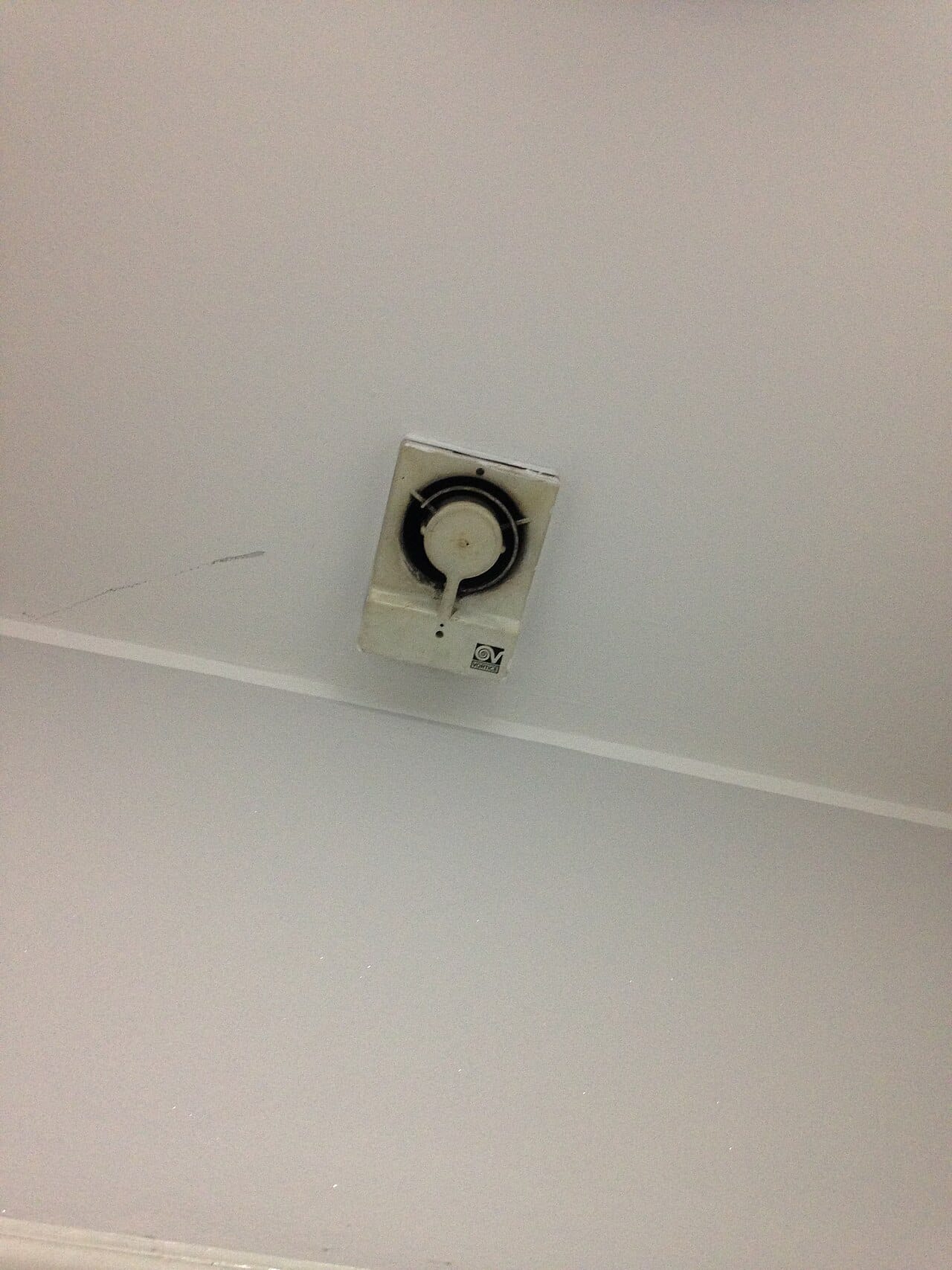
If your bathroom mirror is still fogged twenty minutes after a shower, the fan is not undersized — it is wrongly installed. Building Regulations Part F was updated in 2024 to require a minimum extract rate of 15 litres per second for intermittent bathroom fans, and 8 l/s continuous trickle, but the figure on the box is only the free-air rating. Once you add a 90-degree elbow and three metres of flexible ducting, real-world airflow can drop by 40%.
Sizing the fan correctly
For a standard family bathroom of 2.5 by 2.0 metres with a 2.4 m ceiling, the room volume is 12 cubic metres. Eight air changes per hour — the British Standard 5720 figure for full bathrooms — means you need a fan rated at least 27 l/s, not the 15 l/s legal minimum. Round up: a 100 mm fan rated 30 l/s with a 15-minute timer is the practical floor.
Why centrifugal beats axial in 2026 builds
If your duct run exceeds two metres or has more than two bends, an axial fan will be choked. Centrifugal models like the Vent-Axia Lo-Carbon Silent or Manrose CF100T maintain their rated airflow up to five metres of duct. They cost £80–£140 against £20 for the supermarket axial, but for an exterior wall more than two metres from the fan grille, they are the only honest choice.
Installation: the four things that actually matter
- Use rigid ducting, not flexible. Flexible PVC adds resistance roughly equivalent to one extra metre per metre of duct.
- Slope ducts downward 5° toward the exterior to drain condensation. Otherwise water sits in the duct, runs back into the fan and corrodes the motor within two winters.
- Seal every joint with foil tape, not duct tape. Duct tape adhesive fails above 35°C, and a hot bathroom in summer will pop a duct apart within a year.
- Fit an external cowl with backdraught flap. A standard louvred grille without a flap reverses flow on windy days and pulls cold air into the bathroom — the cause of most ghost draughts.
The spring mould fix nobody mentions
Black mould on bathroom ceilings every spring is almost never a fan failure. It is the fan switching off the moment the light goes off — leaving steam to settle on the coldest surface. Replace the basic switch model with a humidistat-and-timer unit such as the Vent-Axia 100T or Xpelair DX100HTP. They keep extracting for 15–30 minutes after you leave, and ramp up automatically when humidity passes 70%. In a Manchester semi I trialled this on in February 2026, ceiling mould that had returned every spring for six years did not come back.
Regs check: do you need building control?
Replacing a like-for-like fan does not need Building Control notification. New ducting that penetrates an exterior wall, however, is a notifiable Part F job under the 2024 amendments — most installers self-certify under Competent Person Schemes (NICEIC, NAPIT). If you DIY, submit a Building Notice to your local authority for around £180 in 2026. Skipping this is the most common reason home buyers' surveys flag bathroom ventilation as a defect.
Done properly, the installation is a Saturday morning. Done with the wrong duct and a 15 l/s axial, you will be re-doing it inside two years.