The first cold snap in late August or early September always catches people out. You flick the heating on for the first time since April, and within a week the bills remind you why you dreaded doing it. Before that happens, it's worth spending one weekend afternoon crawling around your own home with a lit incense stick or a lighter, checking for the draughts you've been living with all summer without noticing.
Draught-proofing is one of the few jobs in this line of work that pays for itself in a single season. A tube of decorator's caulk costs about £6, a roll of foam draught excluder tape is under £5, and a letterbox brush is around £12. Compare that to a 15% jump in heat loss through an unsealed front door and a couple of gappy sash windows, and the maths does itself. This isn't a job that needs a tradesperson, a skip, or a weekend of your life — it needs about four hours, a shopping list from the local hardware shop, and a bit of patience with the fiddly bits.
Find the draughts before you buy anything
Don't guess where the cold is coming in. On a breezy day, close all the windows and doors, turn off any extractor fans, and walk the house with a lit candle or a stick of incense. Hold it near skirting boards, window frames, loft hatches, door frames and any pipe that passes through an external wall. If the flame flickers or the smoke bends sideways, you've found a leak. Mark each spot with a scrap of masking tape as you go — you'll forget half of them by the time you reach the shop.
Old houses, especially anything built before the 1980s, tend to have the worst offenders in predictable places: under skirting boards where the floor meets an external wall, around loft hatches that were never properly sealed when the insulation went in, and at the base of stud walls built against solid brick. New-build houses usually leak more through trickle vents and around uPVC frames that have started to sag slightly. Either way, the letterbox and the keyhole on a front door are worth checking on every single property — they're rarely sealed from the factory and account for more heat loss than most people expect from something so small.
Doors: the biggest single win
An external door with no weatherstripping can account for a surprising share of a home's heat loss — enough that it's usually the first job on this list, not an afterthought. Start with a self-adhesive foam or brush strip around the frame, sold in 5m rolls for roughly £5-£8 at any DIY shed. Clean the frame with sugar soap first so the adhesive actually sticks — skipping this step is the single biggest reason foam strips peel off within a month.
For the gap under the door itself, a brush-style draught excluder that screws to the bottom of the door works better long-term than the fabric sausage-shaped ones that just get kicked out of place. Expect to pay £10-£18 for a decent aluminium-backed one, cut to width with a hacksaw. If your door has a letterbox, fit a letterbox brush or a flap with a magnetic seal — this alone can close a gap equivalent to leaving a window cracked open permanently.
Windows: know your frame type first
Timber sash windows are notorious for draughts, mostly because the sash cords and pulleys need clearance to move, which means gaps by design. A proper fix is brush-pile draught seals routed into the frame — a specialist job if done properly, typically £60-£120 per window if you hire it out. As a DIY interim measure, self-adhesive foam strip on the meeting rails and a length of brush seal along the bottom sash will cut the worst of it for under £10 a window, though it won't match a professional job for looks or longevity.
uPVC and aluminium casement windows rarely need this treatment when new, but the compression seals harden and shrink after eight to ten years. If you press a finger against the rubber seal and it feels stiff rather than slightly springy, it's due for replacement. Most manufacturers sell replacement gasket by the metre — measure the full perimeter of the opening sash, add 10% for waste, and expect to pay £15-£25 for enough to do a standard window.
Floorboards and skirting: the draught nobody blames
In a house with a suspended timber ground floor, cold air moves up through the gaps between floorboards constantly — it's not glamorous, but it's often worse than anything happening at the windows. A flexible acrylic sealant applied along the skirting-to-floor junction, and along any board gaps wider than about 3mm, closes this off without blocking the underfloor ventilation the joists need to stay dry. Never seal the airbricks on the outside wall to stop this draught — that's a different job entirely, and blocking them risks trapping damp under the floor, which costs a lot more to fix than a chilly ankle.
For wider gaps between individual boards, a decorator's flexible filler or specific floorboard gap-filling strips (rolled cork or foam, sold by the metre) work well without restricting the boards' natural movement with temperature and humidity. Rigid wood filler is the wrong choice here — it cracks out again within a year once the boards start to move.
Chimneys and loft hatches: easy to forget, expensive to ignore
An open, unused chimney behaves like a permanent extractor fan running at full pace, pulling warm air straight out of the room below. If the fireplace is genuinely out of use, an inflatable chimney balloon (£15-£25) or a rigid chimney draught excluder fitted just above the throat plate solves this in twenty minutes — just remember to remove it before anyone lights a fire, and never fit one in a flue that's still in occasional use without proper signage or a very good memory.
Loft hatches are the other classic miss. Most are simply a board resting on a timber lip, with no seal at all. A length of self-adhesive foam strip around the frame, plus two cheap turn-buttons or a bolt to pull the hatch tight against it, closes a gap that's often equivalent to leaving a small window open in the loft all winter.
Tools worth having on the bench
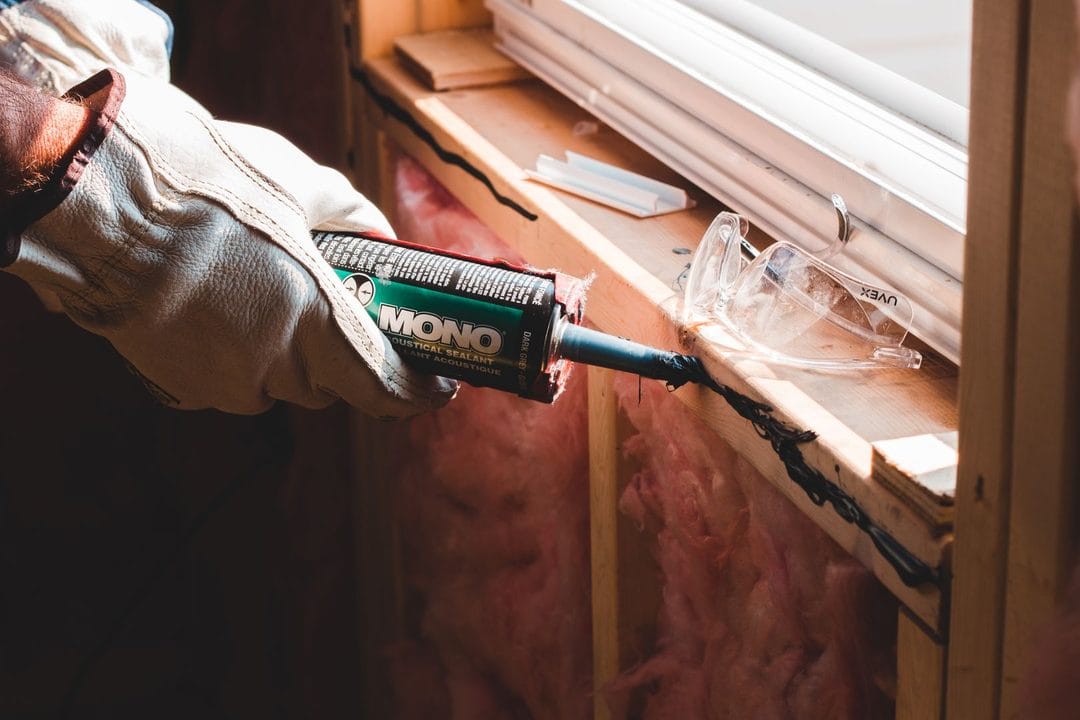
Nothing here requires a trip to a specialist supplier. A sealant gun (£4-£8 for a basic one), a Stanley knife for trimming foam strip flush, a hacksaw for cutting aluminium threshold bars, and a tube of sugar soap for cleaning frames before anything sticks — that's the full kit. If you own a hairdryer, keep it handy too: warming stiff, cold foam strip for thirty seconds before you unroll it stops it snapping at the fold lines, which is a small trick that saves buying a second roll.
Worth mentioning: silicone sealant and acrylic sealant are not interchangeable, and mixing them up is the most common mistake I see on this job. Silicone is for wet areas — bathroom seals, external masonry joints exposed to rain — and it's paintable in only a few speciality grades. Acrylic decorator's caulk is what you want for skirting boards, internal frame gaps and anywhere you plan to paint over the finished seal, because ordinary silicone will reject paint entirely and leave a shiny ridge that never quite matches the wall around it.
What this actually saves you
Government energy advice bodies have put comprehensive draught-proofing of a typical semi-detached house at somewhere around £25-£45 a year in reduced heating use, which sounds modest until you remember the materials cost less than that outright and last five to ten years before needing attention again. The bigger benefit, in practice, is comfort rather than the number on the meter: a room without cold air creeping along the skirting board feels warmer at a lower thermostat setting, which is where the real saving tends to show up — most households nudge the thermostat down a degree or two once the obvious draughts stop, and that's where the pounds actually add up over a full winter.
It's also worth being honest about what won't work. Taping over trickle vents in uPVC windows to stop a draught is a mistake I still see people make — those vents exist to manage condensation and indoor air quality, and blocking them just moves the moisture problem into black mould on the window reveal a few months later. If a trickle vent feels draughty, the fix is a vent with a closable damper, not permanent tape.
A realistic order to tackle it in
- Test for draughts on a windy day and mark every spot with tape
- Seal external doors first — frame, threshold and letterbox
- Move to windows, checking seal condition before adding anything new
- Treat skirting-to-floor gaps in rooms with suspended timber floors
- Finish with the loft hatch and any unused chimney
None of this needs specialist tools beyond a hacksaw, a sealant gun and a decent pair of scissors for cutting foam strip to length. Total spend for a typical three-bedroom semi runs somewhere between £60 and £120 depending on how many windows need attention — cheap enough to do properly rather than half-heartedly, and worth doing before the clocks go back rather than after the first frost forces the issue.
One thing worth saying honestly: draught-proofing won't fix a genuinely cold house on its own. If the loft insulation is thin or the walls are uninsulated cavity, sealing gaps helps but doesn't solve the underlying problem — it just stops you throwing heat away through the cracks while you plan the bigger job. Think of it as the cheap, fast win that buys you time and lowers the bill while the more expensive work gets budgeted for.