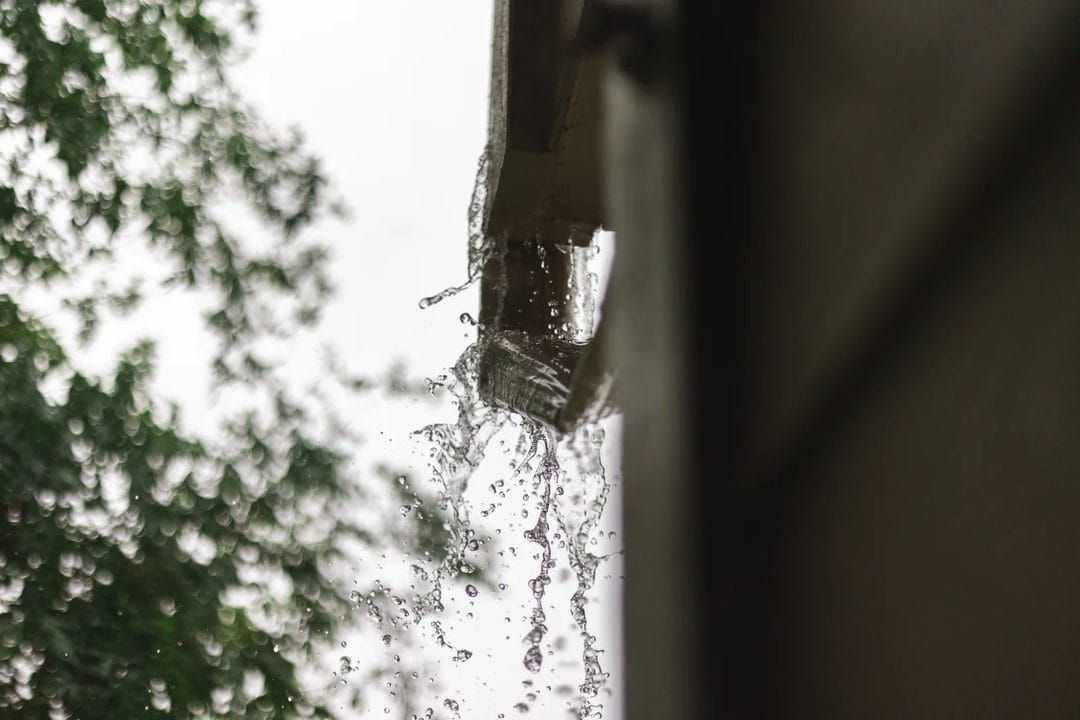
The first proper downpour of autumn always finds the weak point. Suddenly, water that drained quietly off the roof all through July can't get away fast enough, and it sheets over the front edge of a gutter in a thin curtain that catches the streetlight at nine in the evening. A neighbour a few doors down from us spent three years assuming the stain above her lounge window was simple weathering, until a roofer pointed out the real cause: two seasons of leaf mulch sitting in a valley gutter, forcing water back under the felt. By the time anyone noticed, the fascia board behind it had gone soft enough to push a screwdriver straight through with almost no pressure. None of that needed to happen, and none of it needed a tradesperson to prevent — not at the stage where it would have actually mattered.
Oddly, late July and August are the best weeks of the year to deal with this, not October. The guttering is bone dry, the trees haven't dropped a single leaf yet, and every local firm that clears guttering for a living still has gaps in the diary. Wait until the clocks go back and you'll be booking two or three weeks out, assuming anyone even answers the phone during the first autumn gale.
The ten-minute check that beats a November emergency
Pick a dry, calm evening and walk the full perimeter of the house with a torch, gutter by gutter. You're not hunting for anything complicated here — just the handful of signs that show a system is already failing rather than simply dirty. Dirty gutters can wait a fortnight; failing ones can't.
- Dark tide-marks on the brickwork below a joint, which usually means water's been overflowing there for at least one full season
- A visible dip or sag in an otherwise straight run of gutter
- Moss, grass seedlings, or even a small buddleia growing out of the gutter itself — a sure sign of trapped silt underneath
- Paint that's bubbled or lifted on a fascia board, which almost always means water has been sitting behind it for months already
- and on cast iron specifically, rust streaks bleeding down from a joint rather than just surface flaking on top
Any one of these on its own is a Saturday-morning job. Two or three together, especially on the same run, usually mean the fix is bigger than a clean and a bit of sealant.
What a blocked or leaking gutter actually does to a house
Ignore a blocked gutter through one wet autumn and the failure is rarely dramatic — there's no single moment where you'd notice. Water simply finds the lowest point of least resistance: it backs up behind the gutter, tracks under the first course of roof tiles, and soaks steadily into the timber fascia board that the guttering brackets are actually screwed into. A well-maintained softwood fascia, painted every few years, can easily last twenty-five to thirty years. Constant damp exposure from an overflowing gutter can turn that same board spongy within two or three wet seasons, and once that happens, resealing the joints above achieves nothing, because the brackets no longer have anything solid to bite into. The knock-on damage tends to show up somewhere unexpected too — a bedroom ceiling below a valley gutter, a damp patch in a loft corner nowhere near where the leak actually started, black mould creeping along a window reveal two floors down. This is also where composite or uPVC fascia boards genuinely earn their keep over painted timber: they don't rot the way softwood does, though a poorly supported length will still sag and pull away from the wall over time regardless of what it's made from.
Cast iron or uPVC — most people can't actually say which one is on their own house
Most homeowners couldn't tell you, without going outside and knocking on it, which material is keeping the rain off their own roof.
Cast iron is the giveaway on most houses built before the 1960s — heavy, usually in a half-round or decorative ogee profile, and bolted together with proper jointed brackets rather than clipped plastic unions. It has a genuine reputation for lasting a century, and properly maintained runs do exactly that. What that reputation quietly assumes, though, is that someone repaints the whole system with a bitumen-based paint every five to eight years, which almost nobody on an ordinary street actually does. Skip that maintenance and cast iron corrodes from the inside, where the paint has worn thinnest; once rust perforates a section, you can't patch it, because the surrounding metal is thinning at the same rate. uPVC, common on almost everything built from the 1970s onward, fails completely differently: twenty to twenty-five years of UV exposure makes the plastic brittle, and the union joints — the little clip-together brackets between lengths — are usually the first thing to crack, especially on a south-facing elevation that gets the most sun. A cracked union costs next to nothing to fix: £3 to £8 for a replacement bracket and clip from Wickes or Toolstation, and most roof lines only need two or three swapped out at a time.
If you've got sound cast iron, don't rip it out for uPVC just because painting it every few years is a chore. A repainted cast iron system will outlast three generations of budget uPVC, and on a Victorian or Edwardian terrace, swapping it for plastic ogee sections genuinely looks wrong from the pavement — buyers and conservation-minded neighbours both notice.
Ladders, and what "Working at Height" rules actually mean for you
The Work at Height Regulations 2005 get mentioned constantly in gutter-clearing quotes, and it's worth being precise about what they cover. They bind employers and the self-employed carrying out work activities — a jobbing gutter-clearing firm, in other words — not a homeowner up their own ladder on a Sunday. But the safety logic behind them is exactly why a professional callout costs what it costs, and it's worth borrowing regardless of who's legally covered. HSE's own ladder guidance still applies whether you're being paid or not: the 1-in-4 rule (a ladder set at roughly 75 degrees, so the base sits one unit out for every four units of height), three points of contact maintained at all times, and never leaning sideways to reach "just a bit further" along a gutter run.
Don't do this job from a stepladder wedged on a wheelie bin or balanced on an upturned garden chair — that's how most DIY gutter falls actually happen, not from a properly set-up ladder failing. Buy or hire a proper ladder stand-off bar instead, roughly £25 to £40 at Screwfix, which spreads the load across the fascia rather than resting the ladder rail directly against plastic guttering that will simply crack under the sideways pressure. A single-storey bungalow with firm, level ground underneath is a reasonable DIY job for most competent homeowners. A three-storey Victorian terrace, or any run above a conservatory roof, glass extension, or steep bank, is where paying for a proper access setup or a vacuum-system clearance stops being optional caution and starts being common sense.
When Building Regs Part H3 actually gets involved
It sounds unlikely that Building Regulations would care about something as mundane as a gutter, but Approved Document H — specifically Part H3, rainwater drainage — does set minimum standards for how roof water gets carried away. It doesn't apply to routine clearing, resealing, or like-for-like replacement of an existing run; you don't need building control sign-off to swap a cracked length of ogee gutter for another one. Where it does apply is new work: adding a dormer or an extension that increases the roof area draining into an existing system, or replacing a whole run with a different capacity gutter, both of which change how much water the system has to carry. In those cases, your local authority building control team — or a competent installer registered under a relevant scheme — needs to check the new setup can actually cope, because an undersized gutter on an extended roof is a guaranteed overflow problem the first time it rains properly.
Real costs: DIY kit, a professional clear-out, or a full replacement
A basic DIY clear-out needs surprisingly little kit. A telescopic gutter-cleaning attachment that fits a garden hose costs roughly £25 to £45 at Screwfix or Toolstation, and if you're going to do this every year rather than once, a proper set of platform steps — not a stepladder — from a builders' merchant like Travis Perkins runs £120 to £180 and pays for itself within a few seasons. Sealant for a leaking joint, something like Evo-Stik's gutter and flashing sealant, is another £8 to £12 a tube. Professional clearance using a vacuum system mounted on a van, which reaches most two- and three-storey houses without anyone going up a ladder at all, typically runs £60 to £120 per visit depending on the size of the house and how easy the access is.
The harder call is knowing when to stop patching and replace a whole run. If more than about a third of the brackets on one length have failed, or the gutter has visibly bowed away from the fascia along its length rather than at one joint, don't keep fixing it section by section — replace the whole run in one go. Doing it piecemeal over two or three years, with a callout each time, very reliably costs more in total than one clean job done properly, and a straightforward uPVC ogee replacement runs somewhere between £15 and £25 per metre installed, with cast iron or cast-iron-effect systems considerably more once you account for the weight and the specialist labour involved.
A ten-minute walk round the house with a torch this weekend, while the ladder's still dry and the trees are still full, is about the cheapest hour you'll spend on the place all year.