How to Install an Outdoor Garden Tap: A Weekend DIY Guide
Fit your own outdoor garden tap in an afternoon for about £80 in parts. A UK DIY guide covering regs, double check valves, isolation, and the winterising step that saves the tap.
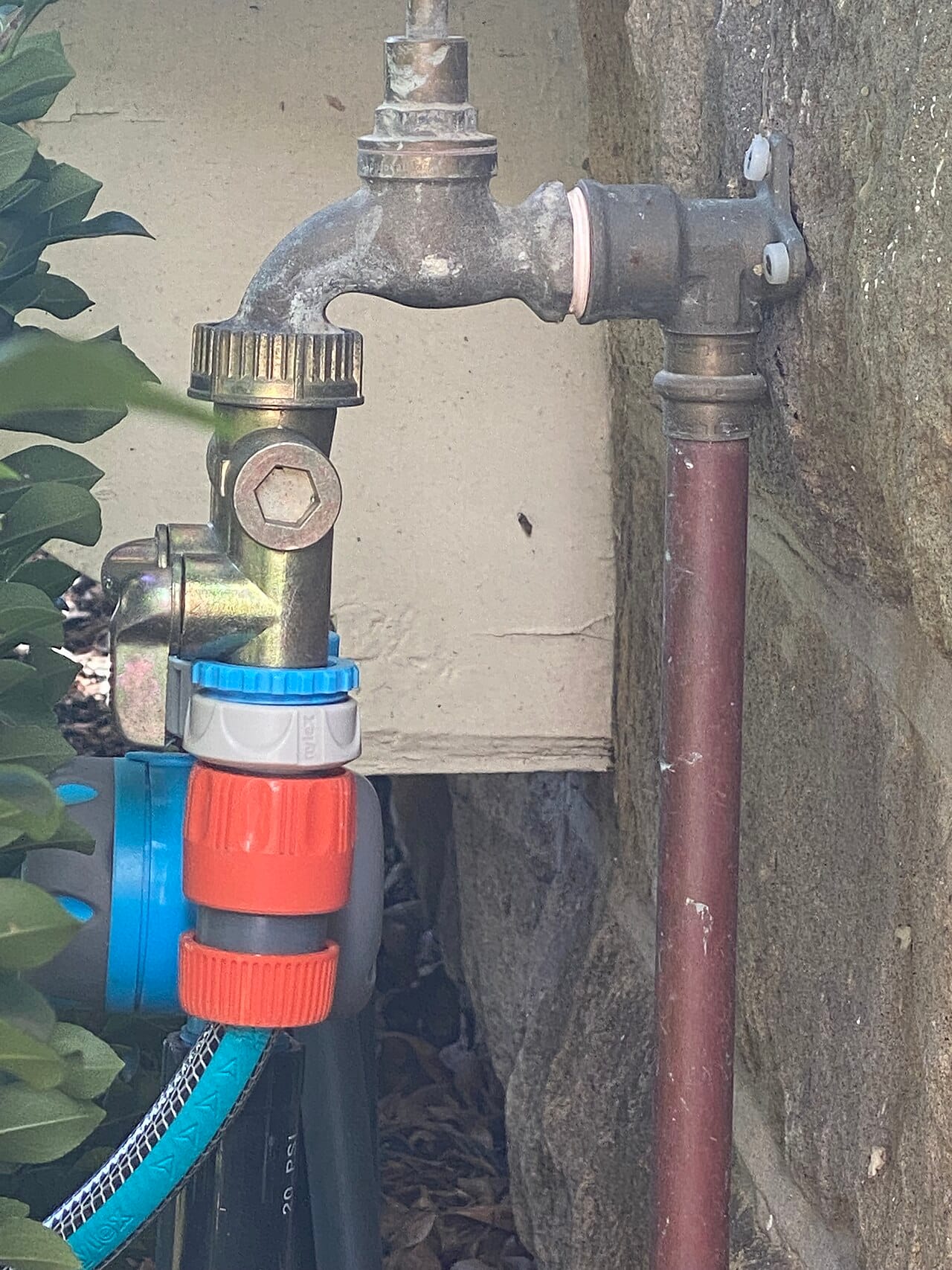
April is when the hose pipe comes out of the shed and you remember, again, that you're dragging it through the kitchen because there's no outdoor tap. Every spring the same scene: muddy boots off at the back door, water trail across the tiles, the dog confused about what's happening. An outside tap solves all of it for about £80 in parts and an afternoon's work.
Fitting one yourself is one of the more satisfying DIY plumbing jobs because the consequences of getting it right or wrong are immediate — turn the stopcock back on and you either have water in the garden or water on the kitchen floor. Done properly, it'll still be working in twenty years. Done badly, it'll be dripping by next weekend and split the first cold night below minus two. The difference isn't talent; it's understanding a few specific things that plumbing YouTube videos tend to gloss over.
What You're Actually Dealing With: Regs, Risks, Realities
Before anything else, the Water Supply (Water Fittings) Regulations 1999 apply to this job. You don't need to notify your water company in advance for most domestic outdoor tap installations, but the tap you fit must include a double check valve — single check valves were phased out for this purpose years ago. The risk is backflow: water sitting in your hosepipe mixing with fertiliser, dog water bowls, or worse, and being siphoned back into the mains if pressure drops. A double check valve prevents that, and it's not optional.
You also need to think about frost. Every winter a chunk of outdoor taps split because they were fitted without an isolation valve inside the house, or fitted with one that nobody ever turns off in October. If your new tap can't be drained and shut off from inside when the forecast turns, you're designing in a failure. Every outdoor tap installation should have an internal isolator — usually a quarter-turn lever valve on the pipework just before it leaves the wall.
One more reality: if you live in a flat, a listed building, or a new-build still under NHBC warranty, check before you drill anything. A managing agent or warranty provider can cause expensive grief if you punch a hole through an external wall without the right permission.
Tools and Parts List
A full-kit runs about £60–£90 at Screwfix, Wickes, or B&Q. Shop around — the same Reliance Valves double check bib tap is sometimes £15 cheaper at one store than another in the same week.
- Outdoor bib tap with integrated double check valve (Reliance Valves, JG Speedfit, or similar — around £25–£35)
- 15mm isolation valve with lever handle (£4–£6)
- 15mm copper pipe, roughly 1m depending on your layout
- 15mm push-fit tee connector or compression tee (push-fit is faster, compression is cheaper)
- 15mm 90° elbows — two or three depending on the route
- Wall plate elbow (the one the tap actually threads into — sized 1/2" BSP female to 15mm)
- PTFE tape
- Pipe insulation sleeve for the section inside the wall cavity
- 100mm long 10mm masonry drill bit, plus a 22mm core drill bit for the pipe pass-through
- Silicone sealant (neutral cure, not acetoxy — the latter corrodes copper over time)
- Basin spanner or adjustable, plus a pipe cutter and deburring tool
- Bucket and old towels (you will underestimate the dribble when you cut the pipe)
If you're going through a solid brick or stone wall, add an SDS drill to the list — an ordinary hammer drill will take an hour to do what an SDS does in three minutes, and you'll hate yourself halfway through.
Choosing Where the Tap Goes
The best location is the back wall of the kitchen, where you usually already have a cold mains supply running to the kitchen sink cold tap. Work inside first: trace the cold feed from the stopcock under the sink, find a straight horizontal run of 15mm copper, and picture where a tee would go. That point, extended straight out through the wall, is where your tap should live.
Three other things to check before you commit:
- Height — about 600mm above ground is standard, high enough to clear a watering can under the spout
- Inside the wall cavity — make sure you're not drilling through an electrical cable run or a vertical damp-proof course. If the property has cavity wall insulation, the hole will need sleeving to prevent water tracking back into the insulation
- Outside obstructions — air bricks, outdoor lights, satellite dish cables. If there's a cavity tray above a doorway in the same wall section, stay well clear of it
Step 1: Turn Off the Water and Plan the Route
Under the kitchen sink, turn the stopcock clockwise until it stops. Open the cold kitchen tap to drain the pressure, then open the upstairs cold tap too. If either keeps running more than ten seconds, your stopcock is passing — you'll need to turn off the external stopcock at the boundary, usually a buried Thames Water or local equivalent valve just inside the property line.
With water off and drained, dry fit the whole new pipework before you glue or push anything permanently. Lay the tee, the isolation valve, a short run of pipe, an elbow, and the wall plate elbow end-to-end on the worktop. This tells you how much copper pipe you actually need and where the core drill needs to come through the wall — measure from the centre of the tee to the centre of where the wall plate elbow will sit.
Step 2: Drill the Pipe Pass-Through
Mark the exit point inside, then transfer the mark outside by drilling a small 6mm pilot hole straight through with a long masonry bit. A pilot hole stops the core drill wandering on a brick face and lets you see exactly where you're coming out on the outside wall.
Core-drill from outside, on a slight downward angle back towards the inside — about 3–5 degrees off horizontal. That slope means any water sitting in the pass-through drains outward rather than running down the inside of your wall. Wear goggles, keep the drill off the trigger every few seconds to let it cool, and expect it to take a few minutes through a full brick wall.
Once through, sleeve the hole. A length of 22mm plastic pipe wrapped with pipe insulation foam works. This does two things: isolates the copper pipe from brickwork so condensation and contact don't corrode it, and gives you a way to seal around it later with silicone.
Step 3: Fit the Tee and Isolation Valve
Back inside, cut the cold feed. Use a rotary pipe cutter — not a hacksaw, which leaves burrs and copper filings that end up wrecking tap washers downstream. Cut out a section just wide enough to accept the tee connector. Deburr both ends with a reamer or fine file.
If using push-fit, push each pipe end fully home — it should feel like it bottoms out firmly, not vaguely. Check the collet is back in its resting position. Pull the pipes gently; they shouldn't move. If using compression fittings, tighten by hand, then give them another three-quarter turn with a spanner. Don't over-tighten — crushed olives leak.
The isolation valve goes next, with the lever oriented so the closed position is actually reachable. That sounds obvious until you've fitted one where the lever ends up behind a cupboard panel. Orient it before you commit.
Step 4: Run the Pipe to the Wall Plate Elbow
Measure carefully, cut the copper pipe to length, and connect the isolation valve through a 90° elbow to the wall plate elbow. The wall plate elbow is the component that gets screwed into the wall cavity on the inside face — it has two mounting holes and a 1/2" BSP female thread on the outside end.
Use the two masonry screws and plugs that usually come with wall plate elbows to fix it into the brickwork. If the inside surface is plasterboard on dot-and-dab, you may need to chase back to solid brick — a wall plate elbow flexing against plasterboard will eventually loosen and leak. Seal around the pipe entry with silicone.
Step 5: Fit the Tap
Wrap the threaded end of the outdoor bib tap with PTFE tape — four or five wraps, clockwise when looking at the thread from the end. Screw the tap into the wall plate elbow by hand until it's finger-tight. The tap needs to end up pointing downward when fully tight. If it's going to end up sideways at full tightness, back it off a quarter turn and add another couple of wraps of PTFE to increase the friction.
Tighten with a basin spanner, stopping as soon as the tap is in the correct orientation. Do not over-torque — you'll distort the wall plate elbow or crack the tap body, and you cannot see either until it's too late.
Step 6: Turn the Water Back On and Check
Close the outdoor tap first. Then open the internal isolation valve. Then, and only then, open the main stopcock. Watch every joint for the next sixty seconds. Press a piece of kitchen roll against each connection — damp paper towels reveal slow weeps that your eye won't spot.
Open the outdoor tap. You want a strong, steady flow. If flow is weak, either the internal isolation valve isn't fully open, there's debris in the double check valve from cut copper swarf, or you've kinked the pipe at an elbow. Close the outdoor tap and watch the spout for drips over five minutes — any drip at all means a washer issue, usually debris getting caught on first closure. Run the tap hard for ten seconds to flush it, then close and observe again.
Winterising: The Step That Saves the Tap
Every October, before the first frost, turn off the internal isolation valve. Open the outdoor tap and leave it open all winter. Any water trapped between the isolation valve and the tap body will either drain out or have room to expand into ice without splitting the pipe or the tap.
If the tap doesn't drain when the outside tap is opened — because there's a slight rise in the pipework, or the internal valve is higher than the tap — the pipe will hold water. In that case, remove the tap head and blow the line out with a bit of lung pressure or a compressor, just enough to clear standing water. It sounds fussy, but one split pipe is a £300 call-out plus remedial plasterwork inside the house.
What Can Still Go Wrong
Three things account for most post-install failures. First, dripping spout within the first month — almost always debris in the washer from the install. Shut off the isolation valve, unscrew the tap head, clean the washer seat, reassemble. Second, the tap pointing off-axis after tightening — almost always fixable by adding PTFE wraps, not by over-tightening. Third, slow leak where the tap meets the wall plate elbow — usually insufficient PTFE, sometimes cross-threaded. If cross-threaded, replace the wall plate elbow; a compromised thread won't hold long-term.
There's a fourth, rarer issue: if the double check valve chatters or buzzes when the tap closes, you've got a water hammer problem. Fitting a small arrestor on the cold feed cures it.
The Reason This Job Is Worth Doing Yourself
A plumber in most of the UK will quote £120–£200 for this job, sometimes more in London. The parts cost roughly £60–£80. The maths is obvious, but it's not really about the money. It's that after doing this once, you understand how your cold feed works, you know where your stopcock is, and you've built enough confidence to tackle the next thing — replacing a kitchen tap, fitting an outside hose reel, adding an isolator before a problematic radiator valve. Each job opens up the next. And in the meantime, the hose reaches the bottom of the garden without routing through the kitchen, and everyone is happier for it.