Autumn Boiler Service 2026: Gas Safe Checks, Costs and the Signs You Shouldn't Ignore
The first cold snap always brings the same story: a £70 September service would have prevented the £280 emergency callout in November. Here's what a proper autumn service covers, what it costs, and which warning signs mean don't wait.
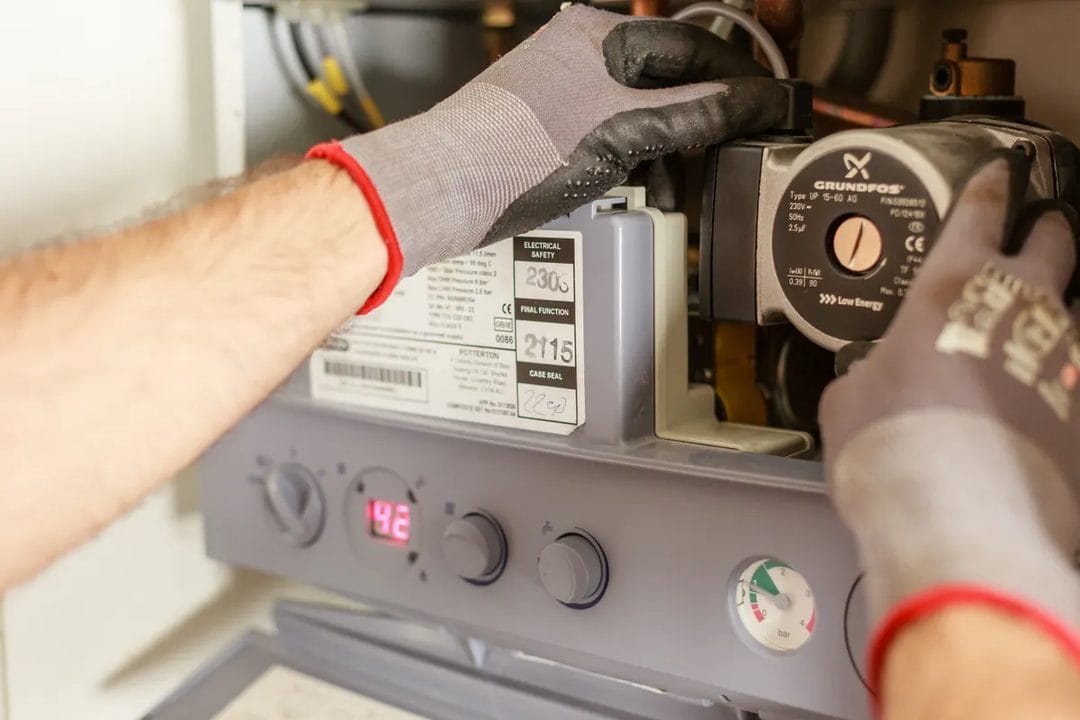
The first properly cold snap of the year has a predictable side effect: Gas Safe engineers' phones stop ringing in September and don't stop again until March. In practice, half of those November callouts are boilers that would have cost £70–£90 to service back when the weather was still mild, and now need a £220–£350 emergency repair with an engineer who's booked out for a fortnight. That gap between "cheap and scheduled" and "expensive and urgent" is entirely avoidable, and it closes the moment you get an engineer round before the heating gets switched on for real.
Why September Beats a November Emergency Call
Boilers that have sat idle all summer don't fail gracefully. Pumps that have been still for four months seize slightly, ignition components that were marginal in May become dead in October, and condensate pipes that were never checked freeze the first hard frost and shut the whole system down. An annual service catches almost all of this before it becomes a breakdown, because a Gas Safe registered engineer is looking for exactly the small faults that turn into no-heat-no-hot-water emergencies once the temperature drops. Book in September or early October and you're choosing your own appointment slot. Wait until the first genuinely cold week and you're competing with everyone else in your postcode who had the same idea a week too late — and paying the callout premium that comes with it. Most independent engineers in the trade will tell you the same thing off the record: their September diary has gaps, their November diary doesn't, and the difference in how quickly they can get to you is not subtle.
There's also a straightforward safety argument that has nothing to do with convenience. Carbon monoxide has no smell, no colour and no taste, and the Gas Safe Register's own data consistently shows poorly maintained or badly installed appliances as the leading cause of domestic CO incidents. A service isn't just an efficiency check — it's the one point in the year when someone qualified actually opens the casing and looks at the parts that could poison you silently. Skipping it to save £80 is a genuinely bad trade.
What a Gas Safe Engineer Actually Checks
A proper service takes 30–45 minutes and isn't just a glance at the display panel. Inside the casing, the engineer checks the burner and heat exchanger for scale and soot deposits, inspects the ignition and flame sensor, tests the pressure relief valve, and confirms the boiler's operating pressure sits where the manufacturer specifies — usually 1 to 1.5 bar on a sealed system when cold. They'll also check the seals and safety devices haven't degraded, since a perished door seal on some older Worcester Bosch and Vaillant models is one of the more common minor faults caught at service.
The Flue, Ventilation and Combustion Analysis
Outside the casing, the flue gets inspected for correct termination, blockages and physical damage — birds nesting in an external flue terminal is a genuinely common August-to-September problem. The engineer also runs a combustion analysis, sampling the flue gases to check the ratio of carbon dioxide to carbon monoxide. This single test is the closest thing to hard proof that your boiler is burning gas efficiently rather than wastefully, and a bad reading here is the strongest signal that something inside needs attention before winter, not after.
What You'll Actually Pay in 2026
Prices vary by region and by whether you're booking a big-name provider or an independent local engineer, but the current UK market breaks down fairly predictably. British Gas and similar national providers charge around £99–£129 for a standalone annual service. An independent Gas Safe registered engineer typically charges £60–£90 for the same job, and often less if you bundle it with a boiler cover renewal. Landlords need something slightly different — a full Gas Safety Certificate (CP12), which covers every gas appliance in the property, runs £65–£95 depending on how many appliances there are to check. Always ask for the engineer's Gas Safe ID card and check the registration number on the Gas Safe Register website before letting anyone loose on your boiler; it's free, takes thirty seconds, and confirms they're actually qualified for the specific appliance type in front of them.
If the service turns up a fault, repair costs escalate fast and unevenly. A replacement pressure relief valve is a £40–£70 job, and a new pump runs £150–£250 fitted. Rather more painful is a failed PCB — the control board that's effectively the boiler's brain — which can be £250–£450 depending on the model, and on some discontinued combi units the part alone costs more than a basic service contract would have for the next three years. This is the maths that makes annual servicing worth doing even when nothing seems obviously wrong: catching a scaling heat exchanger at the "needs a powerflush" stage costs a fraction of catching it at the "heat exchanger has cracked" stage. Bear in mind these are fitted-price ranges from independent engineers rather than the callout-plus-parts-plus-labour figure a national provider will quote, which tends to sit noticeably higher for the same job.
Five Signs That Mean Book Now, Not "Sometime This Month"
- Yellow or orange flame instead of crisp blue — this is a genuine warning sign of incomplete combustion and possible carbon monoxide production, not a cosmetic quirk
- Rising energy bills with no change in usage habits
- Banging, gurgling or kettling noises from the boiler or pipework
- The pilot light keeps going out, or the boiler locks out and needs resetting more than once a month
- Black or sooty marks around the boiler casing or flue terminal, and the smoke alarm behaving oddly near the kitchen — these two together are not a coincidence, and they're the combination that should get you on the phone to a Gas Safe engineer that day, not next week
Any one of the first four on its own is worth a phone call within the week. The last one isn't optional and isn't a "book for next Tuesday" situation.
Building Regs Part L and the 15-Year-Old Boiler Question
Building Regs Part L governs the conservation of fuel and power, and it's the reason every new gas boiler fitted in England and Wales since 2005 has had to be a condensing model — non-condensing boilers simply can't be legally installed anymore. Servicing an old boiler doesn't trigger Part L compliance; you're not required to replace anything just because it's ageing. But the numbers are worth knowing anyway. A pre-2005 non-condensing boiler typically runs at 70–78% efficiency. A modern A-rated condensing combi from Worcester Bosch, Vaillant, Ideal or Baxi runs at 92%+ ErP efficiency. On a typical three-bedroom semi with average gas usage, that difference alone is commonly £150–£250 a year in wasted fuel — money spent heating the flue gas that goes straight up and out rather than the house.
So what actually happens if your fifteen-year-old boiler fails the combustion analysis and can't be economically repaired? That's genuinely the moment to think about replacement rather than a third repair in two years, and any new installation will be signed off against current Part L standards automatically — the engineer registers the work with a Competent Person Scheme (Gas Safe covers this for boiler installs) and the local authority gets notified without you having to apply for separate Building Regs approval.
Cover Plans vs Pay-As-You-Go Servicing
Boiler cover plans from British Gas, HomeServe and similar providers run £15–£35 a month and bundle the annual service with breakdown cover, parts and labour for the year. That sounds like straightforward peace of mind, and for older boilers with a track record of faults it often is. The catch that catches people out is exclusions: most standard plans classify limescale damage to a heat exchanger as "lack of maintenance" rather than a covered breakdown, which matters enormously if you're in a hard-water area like much of the South East, the Midlands or East Anglia. Read the policy document for exactly that clause before you sign, because it's the single most common reason a claim gets refused.
Pay-as-you-go with an independent local engineer is cheaper over a typical year if your boiler is under ten years old and has no history of faults — you're paying £60–£90 once rather than £180–£420 across twelve monthly payments for cover you may never use. Once a boiler passes the ten-to-twelve-year mark, or has already needed two or more repairs in eighteen months, a cover plan starts to make financial sense as insurance against a major component failure. Choose the cover plan for an ageing, fault-prone boiler. Choose pay-as-you-go for anything younger and reliable — there's no reasonable argument for paying a monthly premium to insure something that's barely used its warranty.
What You Can Check Yourself Before the Engineer Arrives
A handful of checks take five minutes and either save the engineer time or catch something before it's worth a callout at all. Check the boiler pressure gauge sits between 1 and 1.5 bar when the system is cold — if it's below 1, top up via the filling loop, and if that's a weekly habit rather than a one-off, mention it to the engineer since it usually points to a slow leak somewhere in the system. Bleed any radiators with cold spots at the top and warm at the bottom, since trapped air is the classic cause and a five-minute job with a radiator key from Screwfix or Wickes. Check the condensate pipe — the white plastic pipe usually running outside to a drain — isn't already showing signs of a previous freeze, and if it runs externally in an exposed spot, lagging it now with pipe insulation costs under a tenner and prevents the single most common cause of a dead boiler on the coldest morning of the year.
One thing worth saying plainly: a magnetic filter fitted to the system (Fernox and Sentinel both make widely stocked versions, available from most plumbers' merchants and larger Screwfix branches) genuinely extends the interval between problems in hard-water areas by trapping the sludge and debris that would otherwise settle in the heat exchanger. It's not a legal requirement and it won't feature on any Gas Safe checklist, but plenty of engineers will tell you it's the £120–£180 upgrade that's paid for itself within three years on an older system.