Exterior Painting Before Autumn: Your Last Window to Get Masonry and Woodwork Right
The weather window for exterior painting is closing fast — here's how to prep, price and paint masonry and woodwork properly before the first cold snap.
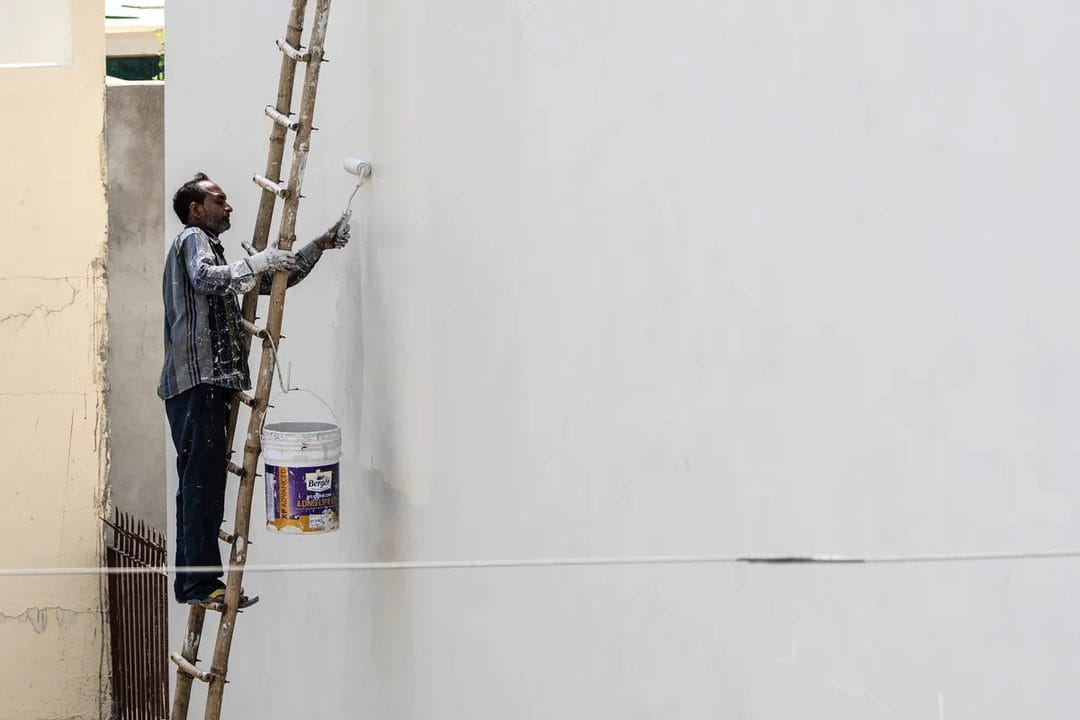
Nine degrees. That's the temperature Dulux specifies as the minimum for applying its Weathershield masonry paint, and by the third week of September in most of the UK, you're gambling on whether you'll get it. Painters who've done this for twenty years all say the same thing: the real deadline for exterior work isn't a date on a calendar, it's the first proper cold snap, and this year that's likely to land somewhere in the first half of October. Everything you're going to do to the outside of your house this year needs to happen in the next four to six weeks, or it waits until next spring.
That's not scaremongering. Masonry paint, wood primer, undercoat and gloss all rely on a chemical curing process that needs both warmth and dry air to complete properly. Paint that's too cold when it goes on, or that gets rained on before it's cured, doesn't just look patchy — it fails early, and you end up redoing the job in eighteen months instead of getting the seven-to-ten years you'd expect from a proper Weathershield or Sandtex system. Overnight dew is the part most people forget about, because a warm afternoon with a clear sky can still drop the surface temperature below dew point by 4am, and any paint applied late in the day without enough hours left to cure before that dew settles ends up with a faint bloom across the finish. If your fascias are chalky, your render's got hairline cracks, or the front door's gloss has gone matte and porous, this is the window. Start early in the day rather than after lunch, so the paint's had the maximum number of daylight hours to set before the temperature drops again. Miss the window entirely and you're looking at scaffolding in April instead, paying spring rates when every tradesperson in the area is booked three weeks out.
Masonry and woodwork play by different rules
Render, brick and pebbledash want a different product to timber, and treating them the same is where a lot of DIY jobs go wrong. Masonry paint — Dulux Weathershield, Sandtex Trade Smooth, or Johnstone's Stormshield — needs a minimum air and surface temperature of 8–10°C, rising and not falling, with no rain forecast for at least four hours after application and ideally overnight. Check the surface temperature with a cheap infrared thermometer from Screwfix (around £15), not just the air temperature on your phone — north-facing render can sit five or six degrees colder than a south wall on the same morning.
What masonry paint actually needs
Weathershield Smooth Masonry Paint runs about £78 for 10L at B&Q, covering roughly 12–13m² per coat on previously painted render — expect two coats on bare or heavily weathered surfaces. Sandtex's trade range is a genuine alternative at £62–70 for 10L from Wickes and holds up just as well in practice; the difference is mostly in sheen level and colour range, not durability. Don't buy the cheapest own-brand masonry paint you can find. It goes on thin, needs a third coat to hide the old colour, and you'll have spent more on materials than if you'd bought Weathershield in the first place.
Wood needs primer, undercoat and top coat — in that order, on that timeline
Bare or bare-again timber — fascias, soffits, window boards, the shed — needs a different sequence entirely. Zinsser Bulls Eye 123 is the standard stain-blocking primer for exterior softwood at roughly £22 for 1L or £48 for 2.5L, and it's worth every penny on wood that's had old paint scraped back to bare grain, because it seals in tannin bleed that would otherwise show through as brown streaks weeks later. Follow with an oil-based or acrylic undercoat, then a top coat — Dulux Trade Weathershield Exterior Gloss or Ronseal's Trade Ultimate Protection range both hold up well. Each layer needs a genuine drying window before the next goes on: with acrylic systems that's often 2–4 hours in good conditions, but oil-based products can need 16 hours between coats, which matters enormously when you're racing a weather front.
Prep is most of the job, and it's the part people skip
Skimping on preparation is the single biggest reason exterior paint fails within two years instead of lasting seven. A jet wash — hire one from HSS Hire for around £35–45 a day, or buy a domestic Kärcher K4 from B&Q for about £190 if you'll use it regularly — strips loose material, algae and general grime off render and brickwork before anything else happens. Give it 48 hours to dry out fully before you paint; masonry looks dry on the surface long before the moisture trapped a few millimetres in has actually gone, and painting over damp render traps that moisture, which then blisters the new coat from underneath.
After washing, scrape any flaking or blown paint back to a sound edge with a stiff scraper, then feather the transition with 120-grit sandpaper so you don't get a visible ridge once repainted. Hairline cracks in render — anything under 2mm — take a flexible acrylic filler like Ronseal's High Performance Filler, worked in with a filling knife and left to skin over before painting. Wider cracks, especially ones that have opened up seasonally over a few years, usually mean movement in the substrate rather than simple weathering, and that's a job for a builder to assess, not a filler tube to hide.
Getting up there safely
A standard three-tier ladder handles guttering height and most first-floor windows, but anything above that — full-height render, a two-storey gable end, chimney stacks — needs proper access equipment, not a longer ladder balanced at an increasingly stupid angle. HSS Hire's alloy tower packages start around £75 a day or roughly £180 for a full week, and for a full house repaint that's genuinely cheaper than the time you'd lose constantly repositioning a ladder every few square metres. Towers also let you actually reach a consistent working height for cutting in edges cleanly, which a ladder never does properly.
Working near the eaves on a terraced or semi-detached house, you're often within touching distance of next door's boundary. Nobody enforces a formal rule here, but it's basic manners to let a neighbour know if a tower's going up against a shared fence line for a few days — and if you need to lean over into their garden even briefly to reach a soffit, ask first rather than assuming it's fine.
Mould, algae and the black staining nobody mentions until it's back
Painting over it is like painting over a leak — it just waits.
North-facing walls, anything shaded by a tree, and render near ground level all pick up green and black algae growth faster than most people expect, and painting straight over it without treatment is a waste of good paint — the growth keeps living underneath and pushes through again within a year. Ronseal Fungicidal Wash or a proprietary product like Wet & Forget applied a week before painting kills the spores properly rather than just rinsing the visible layer off. It's cheap, around £15–20 a litre, dilutes for a large area, and it's the one step people skip most often when they're in a rush to get the actual paint on. Apply it with a garden sprayer rather than a brush so it gets into the pores of the render, not just the surface texture, and leave it the full week the label states even if the wall looks clean after a day or two — the fungicide needs that time to kill spores below the surface, not just bleach the visible stain. Splash-zone staining at the base of a wall, usually the bottom 30–40cm above ground level, often comes back within a season regardless of treatment because it's caused by rain rebound off paving rather than shade, and the only real fix there is a gravel border or a plant bed that breaks up the splash before it hits the render. Some jobs you just accept and repeat every few years rather than solve outright.
Here's the bit that catches people out: if you're re-rendering a wall rather than just repainting it, and you're tempted to add external insulation while the scaffolding's up anyway, that triggers Part L building regulations on the wall's thermal performance — you can't just slap insulated render over an existing wall without meeting a target U-value, and building control will want to see the calculation. It's a sensible thing to combine with a full re-render if you're doing one, but it turns a weekend paint job into a notifiable works project with a different budget and timeline entirely, so don't decide that on a whim halfway through a Saturday.
Colour isn't always yours to choose
If the house sits in a conservation area, or has an Article 4 direction attached to it — common on estates built with a uniform render colour, or in older town centres — repainting the front elevation a different colour can technically require planning permission, even though painting the same colour back on never does. It's worth a five-minute call to the local planning department before you buy ten litres of something bold; some councils genuinely do enforce this on conservation streets, and a retrospective planning breach over paint colour is a miserable, avoidable argument to have with a neighbour who reported you. Listed buildings are stricter again — lime render and breathable mineral paints only, no standard acrylic masonry paint, because sealing a solid wall that needs to breathe traps moisture inside and causes exactly the damp problems the paint was meant to prevent.
None of this applies to the vast majority of semis and terraces built after the war, where you can repaint whatever colour you like without asking anyone. But it catches out enough people on Victorian and Georgian streets that it's worth the phone call rather than the assumption.
If the weather turns halfway through
A light shower an hour after masonry paint goes on is usually survivable — most Weathershield-type products are rain-resistant within about an hour of application, though they'll show water spotting that a light rub-down and top-up coat fixes once dry. What isn't survivable is driving rain on a wall that's mid-coat, or leaving a freshly primed section of bare timber exposed overnight before undercoat's gone on — bare wood soaks up moisture fast, and you'll be back to square one with the primer. Keep a roll of heavy-duty dust sheets or tarpaulin on site specifically for this, weighted down at the corners, not the cheap plastic ones that tear the first time wind catches them. B&Q sells a decent 3.5m x 2.5m tarpaulin for around £12, and it's cheap insurance against redoing a section that got caught out.
What a realistic exterior job costs
For a typical three-bed semi — render on two elevations, fascias, soffits, and a front door — budget £250–400 in materials if you're doing it yourself: masonry paint, primer, undercoat, gloss, filler, fungicidal wash, sandpaper, and tape. Add £75–180 for equipment hire depending on how many days you need a tower or jet washer for. Get a tradesperson to do the same job and you're looking at £1,800–3,500 depending on region and the state of the substrate, which is roughly where most people land on whether this is a DIY weekend or a job worth paying for.
My honest take: painting is worth doing yourself if the substrate's in reasonable condition and you're not dealing with anything above two storeys. Once you're pricing in scaffolding rather than a tower, or the render needs proper repair rather than filling, call a tradesperson — the labour cost difference narrows once you factor in your own time, and a botched high-level job is expensive to fix twice.
Check the ten-day forecast before you commit to a start date, not the three-day one. A settled high-pressure spell in early September is worth more than any product on the shelf, and once that window shuts for the year, it stays shut until the clocks go forward.