Gutter Maintenance and Repair: Your Autumn-Prep Checklist for UK Homes
Blocked and sagging gutters are the quiet cause of most winter damp problems. Here's how to clear, inspect, and fix them before the leaves come down, with realistic UK prices and safety advice.
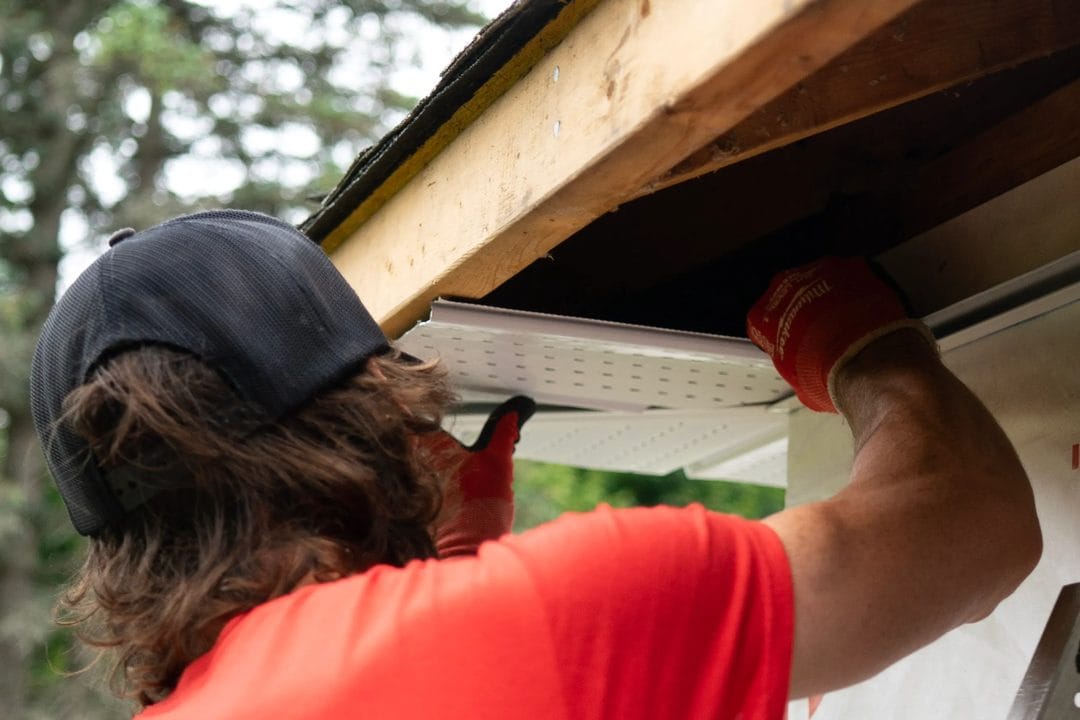
The first sign something's wrong usually isn't a leak — it's a stain. A brown tide mark creeping down the render above your bay window, or a patch of green algae blooming on brickwork that was clean in spring. By the time you notice either, water has been finding its way past a blocked or sagging gutter for weeks, sometimes months, and the fix has gone from a Saturday morning job to a call to a roofer. Late August through September is the window when UK homeowners still have decent weather to sort this before autumn's leaf-fall and the wetter months arrive, and it's worth treating gutter maintenance the way you'd treat servicing a boiler: annual, non-negotiable, and cheaper done early than done in an emergency.
Guttering rarely fails all at once. It fails one clip at a time — a bracket that's worked loose over a decade of thermal expansion, a joint seal that's perished in UV light, a downpipe elbow silted up with moss and grit from the roof above it. None of these are dramatic on their own. Together, over a winter of heavy rain, they push water somewhere it was never meant to go: behind the fascia board, into the cavity wall insulation (where, once wet, it stops meeting the U-value assumptions Part L relies on and stays damp for months), or down through a rendered gable end and into a bedroom ceiling. This guide runs through what needs doing before the season turns, what it costs in the UK right now, and where the line sits between a job you can knock out yourself and one that needs someone on your roof who does this for a living.
Why Late August Is the Right Time to Get Up There
Most of the leaf litter that clogs UK gutters falls between mid-September and late November, depending on how far north you are and what's overhanging the roof. Horse chestnut and sycamore start dropping in early September, oak and beech hang on until November, and anything growing near a north-facing wall tends to shed later than a sun-warmed south side of the same street. Getting the gutters cleared and inspected in late August or early September means you're working with dry debris — last year's leftover leaves, moss, and grit — rather than a wet, compacted mat that's twice as heavy and takes twice as long to shift. It also means any repairs identified during the inspection have time to get sorted, and materials ordered, before the first proper autumn downpour tests the system. There's a second, less obvious reason to do this now rather than in November: insurance. Several UK home insurers will query a water-damage claim if there's evidence of prolonged gutter neglect — algae staining, visible plant growth in the gutter, a downpipe that's clearly been blocked for months — and an annual clear-out, ideally logged with a date and a few phone photos, is cheap proof the damage wasn't down to you leaving it.
What You'll Need
For a straightforward clear-and-inspect job on a standard two-storey semi, you don't need much:
- A sturdy ladder rated for outdoor use — a Class 1 industrial ladder (Werner or Youngman, from about £120 at Screwfix) rather than a domestic stepladder.
- A ladder stand-off or stabiliser bar (around £30–£45), which holds the ladder away from the gutter so you're not resting your weight on plastic that was never designed to take it.
- A gutter scoop or a cheap plastic trowel, gloves, and a bucket with a hook, roughly £15–£20 for the set from Wickes or Toolstation.
- Silicone sealant rated for exterior use — Geocel or Unibond, about £6–£9 a tube — for resealing joints.
- Replacement brackets and clips if anything's obviously perished; uPVC gutter brackets run about £2–£4 each at Screwfix, and a metre of new uPVC gutter is around £8–£12 depending on profile.
- A decent garden hose with a jet nozzle, which does half the clearing job from below if you're not keen on climbing at all.
None of this needs to be premium kit. But don't skimp on the ladder stand-off — it's the £30 item most DIYers leave off the list, and it's the one that stops the ladder twisting sideways off a wet gutter lip.
Ladder Safety — Or When to Hire a Tower Instead
Working at height is where most DIY gutter jobs go wrong, and not from anything exotic — falls from ladders remain one of the most common causes of serious injury in and around UK homes. The basic rules aren't complicated: foot the ladder on firm, level ground (never on a bin, never on paving that slopes towards a drain), keep three points of contact at all times, and never over-reach sideways — move the ladder instead. A good rule of thumb is the belt buckle test: if your belt buckle passes outside the ladder's rails while you're reaching, you've gone too far.
For anything above a standard two-storey house, or if the ground beneath your gutters isn't level and firm, hiring a small scaffold tower is the better call, and it isn't as expensive as people assume. HSS Hire rents a basic 4.2m aluminium tower from around £75–£95 for a weekend — roughly what a jobbing gutter cleaner charges for one mid-terrace house — except you keep the tower for two full days and can also use it for fascia painting or checking the chimney flashing while it's up there. If you've got a dormer window, a bay below the gutter line, or trees close enough that you'd need to lean out to reach behind branches, a tower earns its hire fee back in reduced risk alone.
The Clearing and Inspection Process, Step by Step
Once you're safely up — or the tower's assembled — the process itself is straightforward.
- Scoop out loose debris by hand into the bucket, working from the downpipe outlet backwards towards the high point of each run, which stops you pushing muck further into the pipe.
- Flush the gutter with a hose once it's clear, watching where the water pools. Standing water more than a few millimetres deep after flushing means the fall — the slight gradient every gutter run needs towards its downpipe — has sagged.
- Check every bracket by hand: give the gutter a gentle push and see if it flexes, or if the bracket itself moves in the fascia.
- Look behind the gutter at the fascia board. Soft, spongy timber or peeling paint that's bubbled rather than just faded usually means water's been getting behind the gutter for a while.
- Test the downpipe by pouring a bucket of water down it from the top and listening for a clear run to the drain below — a gurgle or a slow trickle back up usually means a blockage lower down, often at the elbow joint near ground level.
Do this for every run on the house, including the ones over extensions, garages, and porches that people tend to forget because they're low enough to see from the ground and easy to assume are fine.
Common Faults and How to Fix Them
Most gutter problems fall into four categories, and three of them are a Saturday job.
Sagging Gutters
A gutter that's lost its fall usually just needs its brackets adjusted rather than replacing outright. Loosen the screws on the brackets either side of the low point, prop the gutter up with a scrap of wood while you reset the fall — aim for roughly 1:600, a drop of about 5mm over every 3 metres of run, enough that water moves towards the downpipe without looking uneven from the ground — and re-tighten. If a bracket's screw hole has worn out the fascia timber underneath it, don't just drive a longer screw into the same hole; move the bracket a few centimetres along and screw into solid wood, or the fix won't last a season.
Leaking Joints
Old union joints between gutter lengths dry out and crack, especially on south-facing runs that get the most UV exposure. Clean the joint back to bare plastic with a wire brush, let it dry fully, and run a bead of exterior-grade silicone — Geocel Roof & Gutter Sealant, about £7 a tube, does the job properly — along the seam. Skip this on a damp gutter and the sealant won't key to the surface; you'll be back up the ladder within a month.
Blocked Downpipes
If water's pooling at the top of a downpipe but the pipe itself sounds hollow when you tap it, the blockage is usually moss or leaf mulch sitting in the first metre. A plumber's drain rod, or even a length of stiff garden hose pushed down from the top, will usually shift it. For a blockage further down, at or below an elbow joint, it's often easier to unclip the pipe at the joint, clear it from both ends, and re-clip rather than rodding blind from above.
Rot in the Fascia or Soffit Behind the Gutter
This is the one fault that isn't really a gutter job at all — it's a carpentry job that happens to be caused by a gutter fault. If the timber's gone soft and you can push a screwdriver into it without much resistance, the board needs replacing, not just repainting over the top. uPVC fascia and soffit boards have mostly replaced timber on newer installs precisely because they don't rot, and if you're already up there dealing with a failed gutter, it's worth pricing up a uPVC swap rather than repainting timber that'll be back in the same state in three or four years.
When to Call a Professional
Not every gutter job belongs to a DIYer, and pretending otherwise is how people end up in A&E with a broken wrist in October. Call a professional if the property's over two storeys and there's no safe, level ground for a tower — many roofing firms use their own scaffold or a cherry picker for three-storey Victorian terraces, and it's not worth the hire cost or the risk of doing it yourself. Get someone qualified in if you find structural sagging in the roofline itself, not just the gutter — a fascia pulling away from the rafters points to a bigger problem than a weekend can fix. And if the fix involves anything electrical, such as a heated de-icing cable to stop ice damming in winter, that work falls under Part P of the Building Regulations and needs a competent-person scheme installer — don't wire it in yourself and hope building control never asks.
Are Gutter Guards Worth the Money?
Opinions on gutter guards split roughly down the middle among people who've actually used them, and the honest answer is that it depends on what's overhanging your roof rather than on the product itself. Brush-style guards — bottle-brush inserts that sit inside the gutter, around £4–£6 per metre from Wickes — do a reasonable job of keeping large leaves out while letting water through, and they're the cheapest option if you're mainly dealing with a single overhanging tree rather than a garden backing onto woodland. Mesh guard systems that clip over the whole gutter, professionally fitted, run closer to £20–£35 per metre installed, which adds up to a meaningful cost on a full semi-detached run once you're covering the front, back, and any dormer or extension gutters as well. They're genuinely worth that outlay under heavy tree cover, particularly conifers or anything that drops needles or pollen year-round rather than seasonally, because the alternative is clearing the gutters three or four times a year instead of once. Where they don't pay for themselves is on a house with a single deciduous tree that sheds for six weeks in fifty-two — the guard costs more over ten years than the extra clear-outs would, and because you can't see into a covered gutter, a blockage underneath one often goes unnoticed for years until water's backing up over the fascia. Ask what's actually growing near your roofline before you commit to fitting them, and if the annual clear-out only takes twenty minutes, keep the £30 stand-off and skip the guards.